
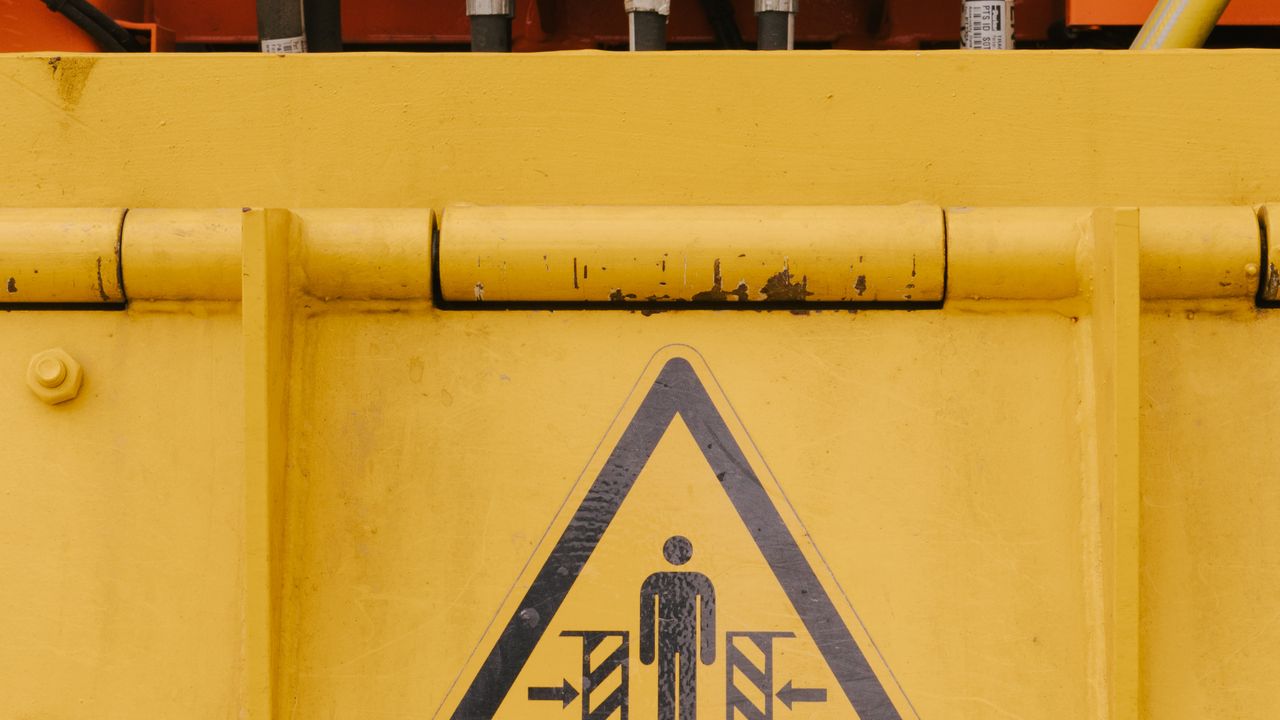
Some places on a worksite are simply more dangerous than others: the swing radius of a crane, the danger zone around a press, an area being worked overhead, a tank or pit. A restricted or exclusion zone is the deliberate decision to keep people out of those spaces unless they have a specific reason and the right precautions to be there. Done well, zones quietly prevent some of the most severe incidents on site.
What counts as a restricted zone
- Machine danger zones — reach, crush, and entanglement areas around equipment.
- Vehicle and plant areas — crane swing radius, excavator slew, loading docks.
- Overhead-work zones — anywhere a dropped object or falling load is possible.
- Confined spaces — tanks, pits and vessels with restricted entry and atmospheric risk.
- Process hazard areas — high voltage, hot surfaces, chemical or pressure hazards.
How to define a zone
A good zone starts from the risk assessment, not the floor plan. Identify the hazard, determine how far its influence reaches (a crane's radius, a machine's reach, an exclusion distance for overhead work), and draw the boundary generously enough to be safe but tightly enough that people respect it. A zone so large it blocks normal work will be ignored; one too small offers false comfort.
Enforcing it — strongest controls first
- Physical barriers — fencing, guarding, gates and interlocks that make entry impossible while the hazard is live.
- Interlocks and presence sensing — equipment that stops automatically when someone enters.
- Clear marking — floor markings, signage and lighting so the boundary is unmistakable.
- Permits and procedures — controlled entry with isolation, atmospheric testing or a spotter where needed.
- Training and supervision — everyone understands which zones exist and why.
A line painted on the floor only works if someone notices when it's crossed.
The enforcement gap
The hard part isn't drawing the boundary — it's knowing when it's breached. Barriers get propped open, a worker steps in for "just a second", or a zone is only dangerous at certain times. Most zone incidents happen not because the area was unmarked, but because nobody saw the moment someone crossed the line.
Where monitoring fits
This is where continuous monitoring adds the most value. Camera-based zone detection can flag in real time when a person enters a defined exclusion area, when occupancy exceeds a limit, or when someone lingers in a hazard zone longer than they should — turning a static painted line into an active boundary that raises an alert the moment it's crossed. It complements physical guarding and interlocks rather than replacing them.
The takeaway
Restricted zones prevent some of the worst-outcome incidents precisely because they separate people from energy and motion that can't be made safe any other way. Define them from the risk, enforce them with the strongest practical control, and put something in place that actually notices when the boundary is crossed.
All posts