
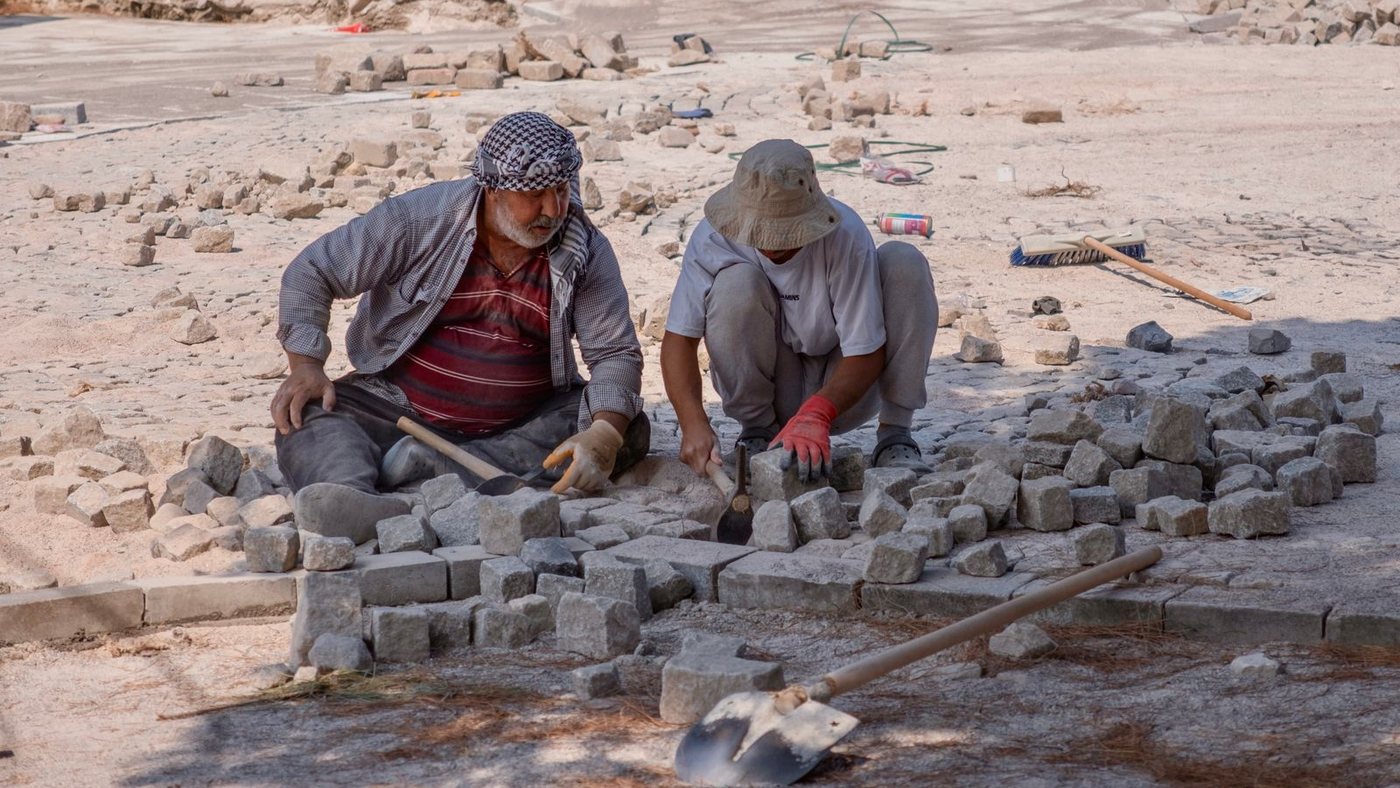
At 15:00 the ban lifts and the crews go back out. The sun is still up, the ground has been absorbing energy for seven hours, and the workers walking back onto it have been sitting in a portacabin sweating for two and a half. Nothing about their physiology resets at 15:00.
That gap — between what a rule covers and what a body experiences — is the whole of occupational heat stress in one sentence. And it is, right now, the most active topic in the HSE field.
Why heat, and why now
In April 2026 the ILO convened a Meeting of Experts on Occupational Safety and Health in Extreme Weather Events and Changing Weather Patterns in Geneva. Its background report opens the policy chapter not with floods or storms but with heat, and notes that 2024 was the hottest year on record and the first in which the global average exceeded +1.5°C against pre-industrial levels. It also records that in July 2024 the UN Secretary-General issued a call to action on extreme heat naming the protection of workers as one of four critical action areas (ILO, MEEWE/2026).
The scale is the reason. Every year an estimated 2.41 billion workers — around 71 per cent of the global workforce — face excessive heat at work, and excessive heat is associated with roughly 22.85 million occupational injuries and 18,970 deaths annually. Regional exposure is highest in Africa (92.9 per cent of the workforce), the Arab States (83.6 per cent) and Asia and the Pacific (74.7 per cent) (ILO, MEEWE/2026, drawing on the ILO's Heat at Work and Ensuring Safety and Health at Work in a Changing Climate reports, 2024).
Productivity moves with it. Recent evidence cited in the same report puts the decline at 2.3 per cent for every degree Celsius above 19°C, and estimates that US$361 billion could be saved globally if prevention measures for heat-related occupational injuries were implemented.
The finding that should change your trigger
Nine out of ten worker exposures to excessive heat, and eight out of ten occupational injuries linked to heat, occur outside declared heatwaves.
That single statistic (ILO, MEEWE/2026) invalidates how most organisations are set up. Heat controls are typically wired to an event: a national heatwave alert, a red warning, a seasonal ban window. But the ILO draws a hard distinction between a heatwave — the WMO's "marked and unusually hot weather persisting for at least two consecutive days" — and excessive heat, which it defines as any thermal condition exceeding the body's capacity to maintain a safe internal temperature during work.
Excessive heat happens on ordinary Tuesdays. It happens in a poorly ventilated warehouse in a month nobody would call extreme. If your escalation only fires when a meteorological service says so, you are watching the smaller half of the problem.
The thermometer is the wrong instrument
Air temperature ignores the four things that decide whether a worker overheats: humidity, radiant heat, air movement, and how hard the person is working. This is why regulators overwhelmingly use the wet bulb globe temperature (WBGT) — described in the ILO report as the most widely adopted indicator, and the one that multi-country field evaluations found most effective for predicting heat-related illness. It can be estimated from local weather data rather than requiring expensive instrumentation.
The heat index is a workable substitute — it needs only air temperature and relative humidity — but it accounts for neither radiant heat nor air speed. The universal thermal climate index (UTCI) assumes a fixed two-hour exposure and a moderate metabolic rate, which makes it awkward for real work.
What matters operationally is the shape of the thresholds: the harder the work, the lower the safe limit.
| Country | Indicator | Threshold |
|---|---|---|
| Qatar | WBGT | 27.8–29.4°C low risk · 29.5–31°C moderate · 31.1–32°C high · ≥32.1°C extreme |
| Singapore | WBGT (outdoor) | <31°C low · 31–32.9°C moderate · ≥33°C high |
| Japan | WBGT (acclimatised) | 33.0°C sedentary · 30.0°C low · 28.0°C moderate · 26.0°C high · 25.0°C very high |
| Belgium | WBGT | 29.0°C light · 26.0°C medium-heavy · 22.0°C heavy · 18.0°C very heavy |
| Greece | WBGT | Complete work stoppage above 32.5°C (mild work) down to 30.0°C (very heavy work) |
| China | Air temperature | 35–36.9°C moderate · 37–39.9°C high · >40°C extreme (outdoor work) |
Selected rows from Table 1 of ILO, MEEWE/2026; the report notes the data is valid as of July 2025. Not a compliance list — check the current instrument in your own jurisdiction.
Read the Belgian row again. For very heavy work, the limit is a WBGT of 18°C. Nobody standing outside on an 18-degree day thinks "heat hazard," which is exactly the point: heat stress is a function of metabolic load, not of weather that feels notable.
The first-week problem
Here is the part that is genuinely under-managed, and it is not subtle.
OSHA's guidance is blunt: almost half of heat-related deaths occur on a worker's first day on the job or first day back after an extended absence, and over 70 per cent occur during a worker's first week (OSHA, Protecting New Workers). Its recommended remedy is the "Rule of 20 percent": day one at 20 per cent of normal duration, increasing by 20 per cent each day.
The ILO frames the physiology the same way. A worker with no exposure to extreme heat in the previous three weeks should be treated as non-acclimatised; two or more hours of daily exposure typically builds tolerance over a one- to two-week period, reducing cardiovascular strain and the risk of hyperthermia. Several countries legislate for it — Mexico runs a six-day protocol starting at 50 per cent of usual duration and rising 10 per cent daily, with a separate four-day protocol for workers returning after nine or more days away; Saudi Arabia recommends seven to fourteen days (ILO, MEEWE/2026).
Now map that onto a real site roster. Three weeks without exposure resets the clock — which means the non-acclimatised population on any given Sunday morning includes new hires, transfers from an air-conditioned facility, anyone back from annual leave, anyone back from sick leave, anyone returning after Eid, and the crew that spent the last month working nights. None of those people are flagged by a weather alert, and almost none of them are on a list anywhere.
The heat doesn't ask how long you've worked here. The statistics say it should be the first thing you ask.
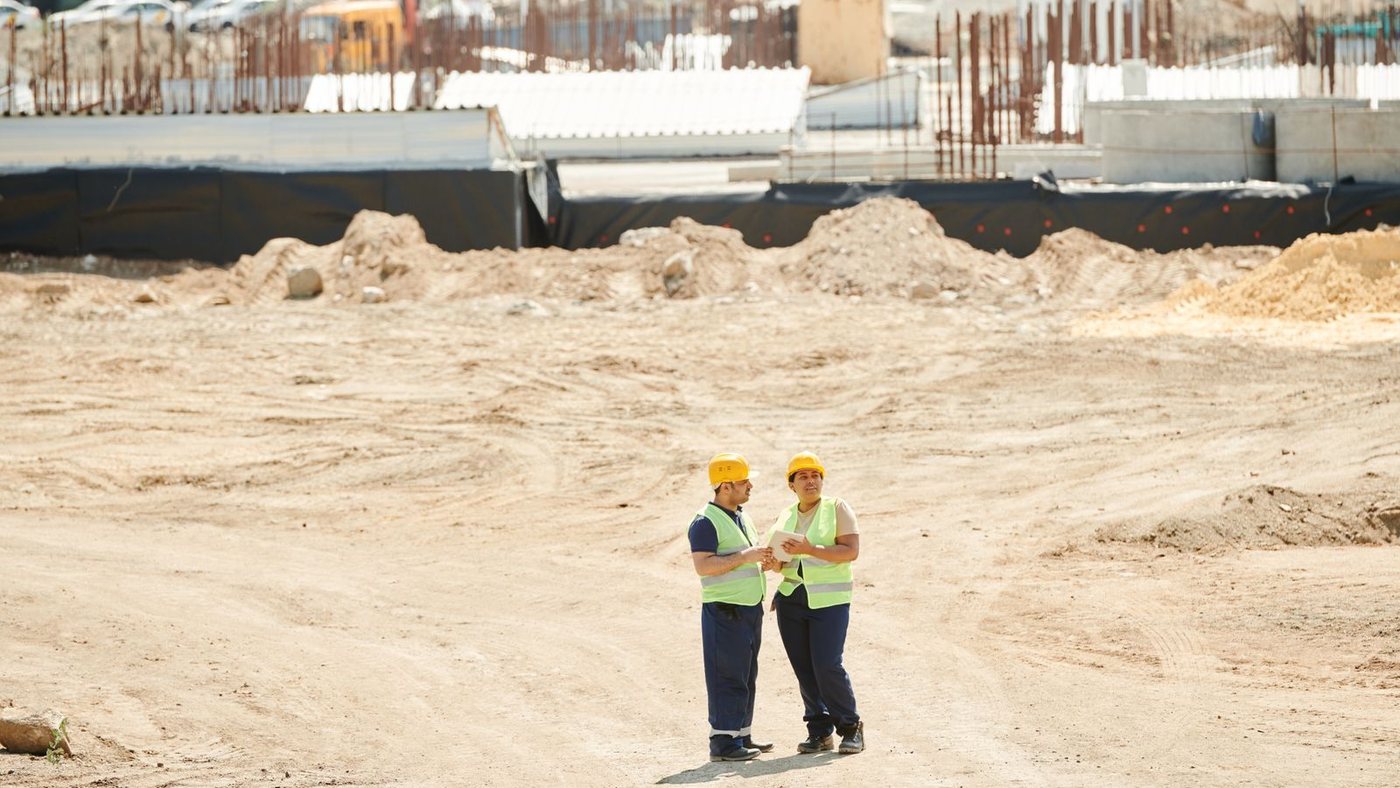
Shade provision is usually judged by whether a structure exists. The operative question is the distance from where the work is happening to where the shade is — because a rest area five minutes' walk away is a rest area people skip.
The regulatory map, as of August 2026
Two philosophies are in play. Calendar-based bans stop work at fixed times on fixed dates regardless of the actual temperature; threshold-based rules trigger on a measured index. Most Gulf states use the first, some jurisdictions use the second, and Qatar uses both.
| Jurisdiction | What applies | Note |
|---|---|---|
| UAE | Outdoor work in direct sunlight prohibited 12:30–15:00, 15 June to 15 September | Ministerial Decree No. 401 of 2015; AED 5,000 per worker, up to AED 50,000 where multiple workers are involved, plus file suspension, classification downgrade and possible prosecution |
| Saudi Arabia | Outdoor work under direct sunlight prohibited 12:00–15:00, 15 June to 15 September | Enforced by the Ministry of Human Resources and Social Development; a Thermal Work Limit indicator is used for heat stress assessment |
| Oman | Outdoor work prohibited 12:30–15:30, 1 June to 31 August | Ministerial Decision No. 286 of 2008, as amended |
| Qatar | Calendar ban plus WBGT-based stoppage, plus a guaranteed right to stop work | Ministerial Decision No. 17 of 2021; oil and gas project activities are outside its scope |
| United States | No federal heat standard in force | The proposed rule has not been finalised; the Heat National Emphasis Program was set to expire 8 April 2026. General Duty Clause §5(a)(1) still applies, and several states have their own rules |
| United Kingdom | No maximum working temperature in law | HSE: indoor workplaces should normally reach at least 16°C, or 13°C for strenuous work; the duty is to maintain a comfortable temperature and provide clean, fresh air |
Sources: ILO, MEEWE/2026 (legal instruments and ban windows); Khaleej Times (MoHRE penalties); OSHA rulemaking page and Ogletree Deakins (US status); HSE (UK).
The American entry is worth dwelling on, because it is the one people misread. OSHA published a proposed heat standard in August 2024 and closed the post-hearing comment period in October 2025; no target date for final action has followed (OSHA; Ogletree). "No standard" is not "no exposure." The General Duty Clause remains fully in effect and gives OSHA independent authority to cite an employer for failing to protect workers from a recognised heat hazard.
What a 12:30–15:00 ban does not cover
The Gulf midday break is a good rule. Compliance is high — MoHRE has reported rates above 99 per cent in recent years, and Saudi Arabia reported 94 per cent for 2025. It removes the single worst window of solar load from the working day, and it does so without requiring anyone to own an instrument.
It also leaves these uncovered:
- Indoor heat. The ban is about direct sunlight. A steel-roofed warehouse, an unventilated plant room, a container being loaded, a kitchen, a laundry — none of them are in scope, and the ILO specifically names poorly ventilated indoor workplaces alongside outdoor work as the highest-risk category.
- The afternoon tail. 15:00 to 18:00 remains hot, and surface and structure temperatures lag the sun. Workers return with a heat debt they accumulated before the break.
- Cumulative multi-day load. A single compliant day says nothing about the fifth consecutive one, or about sleep quality in accommodation that doesn't cool down overnight.
- PPE. Heavy clothing and protective gear raise the risk — and the ILO notes the second-order problem: excessive heat can make protective gear intolerable, which increases exposure to the chemical and dust hazards it was there to control.
- Individual susceptibility. Age, pregnancy, pre-existing conditions, medications, disability, and non-acclimatised status all shift the threshold for a specific person. A rule keyed to a clock cannot see any of them.
- Whether the break was actually taken. A ban that stops work is only as good as the shaded area, the water and the two and a half hours actually being used for cooling — rather than for a different task, in a different place, out of sight.
The controls that move the number
The hierarchy applies here as it does anywhere else, and the top of it is scheduling, not equipment.
- Move the work. Reschedule heavy tasks to early morning. Mechanise what can be mechanised. This is the only control that removes the exposure rather than managing it.
- Engineer the environment. Shade at the work face, not only at the welfare block. Ventilation and cooling indoors. Reflective barriers against radiant load.
- Run a real acclimatisation programme. With a named list of who is on it and what day they are on. This is the single highest-yield administrative control available, and it is mostly a roster problem, not a safety-budget problem.
- Work–rest cycles tied to an index, not to habit — and enforce them the same way you enforce anything else.
- Hydration with electrolytes, at the work face. Water people have to walk for is water people don't drink.
- Buddy systems and symptom reporting. Someone in the grip of heat exhaustion is a poor judge of their own condition; the person next to them is a better one.
- A right to stop work. Qatar guarantees it: a worker who has good reason to believe heat stress threatens their safety may stop, must inform their supervisor, and cannot be dismissed, discriminated against or deprived of rights for it. That protection is what turns a policy into something a worker will actually use.
- An emergency plan that starts with cooling. Japan requires real-time WBGT monitoring, a symptom-reporting system and defined responses including removal from work, body cooling and medical assistance. China requires heatstroke emergency plans and drills. Brazil requires heat-specific emergency plans and first-aid provision.
Where cameras help — and where they don't
Let's be precise, because heat is a domain where it would be easy to oversell computer vision.
A camera cannot measure heat stress. It does not know a core body temperature, a hydration state, or that someone slept badly in a hot room. Thermal imaging of skin is not a proxy for core temperature. Anyone selling you heat-illness detection from an RGB feed is selling you something that does not exist.
What continuous monitoring does address is the verification layer — the part of heat management that is otherwise taken on trust:
- Was the ban window observed? Whether anyone was working in an exposed area between 12:30 and 15:00 is exactly the kind of question a timestamped record answers and a signed register does not.
- Was the rest area used? An occupancy count of the shaded area during the break window tells you whether the control functioned or whether the crew went somewhere else.
- Is anyone working alone in an exposed zone? Lone work in heat removes the buddy who was supposed to notice the symptoms.
- Did the afternoon restart happen where it was supposed to? Zone and presence detection makes the 15:00 restart visible instead of assumed.
- Evidence, kept. Where a regulator can suspend a file or downgrade a classification, being able to show what a site looked like at 13:40 on a specific Tuesday is worth having.
None of that is a heat control. Shade, scheduling, water and acclimatisation are the controls. Monitoring is how you find out whether they happened — while the shift is still running, rather than in an investigation afterwards.
Six questions before the next shift
- Which of your people are non-acclimatised today — by name, including everyone back from leave in the last three weeks?
- What index are you triggering on, and who measures it? If the answer is "the forecast," you are covering roughly one exposure in ten.
- How far is the nearest shade from the furthest work face, in minutes of walking?
- Which of your indoor areas would fail a WBGT reading right now, and when did anyone last take one?
- If a worker stopped work today because they felt unwell in the heat, what would happen to them by Thursday? Everyone on site already knows the answer; the question is whether you do.
- Can you demonstrate, for any given day this summer, that nobody was working in the sun during the ban window?
The takeaway
Heat is the topic of the moment in HSE for an unglamorous reason: it is the hazard with the widest gap between exposure and regulation. Falls have a hierarchy of protection. Confined spaces have a permit. Heat, in most of the world, has either a clock or nothing — and the evidence says the clock is aimed at the wrong tenth of the problem.
The organisations that get ahead of this in 2026 won't be the ones that bought an instrument. They will be the ones that stopped treating heat as weather and started treating it as an exposure: measured with an index rather than a thermometer, managed by roster as much as by equipment, and verified rather than assumed.
Sources
- Occupational safety and health in extreme weather events and changing weather patterns — Report for discussion at the Meeting of Experts, Geneva, 20–24 April 2026 (MEEWE/2026), International Labour Office, 2026. Source for exposure and mortality figures, the heatwave/excessive-heat distinction, WBGT and threshold data (Table 1, valid as of July 2025), work bans, acclimatisation protocols and workplace measures. ilo.org
- Heat — Protecting New Workers — US Occupational Safety and Health Administration. Source for the first-day and first-week fatality figures and the Rule of 20 percent. osha.gov
- Heat Injury and Illness Prevention in Outdoor and Indoor Work Settings — Rulemaking — OSHA. Source for the NPRM and hearing timeline. osha.gov
- "OSHA's Heat Program to Expire While Heat Standard Stalls" — Ogletree Deakins. Source for the NEP expiry date and General Duty Clause enforcement. ogletree.com
- "UAE midday break: Violators face up to Dh50,000 fine, file suspension, legal action" — Khaleej Times. Source for MoHRE penalty amounts and non-financial sanctions. khaleejtimes.com
- "Midday outdoor work ban returns across UAE for 22nd year" — Gulf News. Source for the 2026 window, exemptions, employer welfare provisions and reported compliance rates. gulfnews.com
- Temperature — guidance for employers — UK Health and Safety Executive. Source for the absence of a maximum working temperature and the 16°C / 13°C indoor minima. hse.gov.uk
- WHO and WMO joint report and guidance on protecting workers from heat stress — World Health Organization, 22 August 2025. Background on the health impacts of occupational heat exposure. who.int
A note on the numbers: the exposure, injury and mortality figures above are the ILO's own estimates, restated in the 2026 meeting report from its two 2024 studies — Heat at Work: Implications for Safety and Health and Ensuring Safety and Health at Work in a Changing Climate. National thresholds and ban windows are quoted as recorded in that report and were valid as of July 2025; ministries revise them, so confirm the current instrument before relying on any row.
General information, not legal or medical advice. Verify obligations against the legislation applying to your sites, and take qualified advice on heat management for your own operations.
All posts